Committed for excellence

VJS FUMIGATION SERVICE
ISPM-15 Wooden Packing Material Treatments
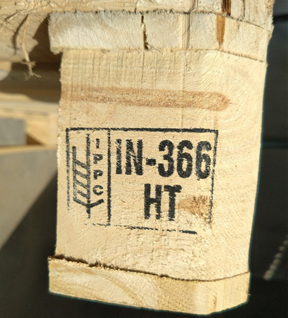
Wood originating from living or dead trees may be infested by pests. Wood packaging material is frequently made of raw wood that may not have undergone sufficient processing or treatment to remove or kill pests and therefore remains a pathway for the introduction and spread of quarantine pests. Dunnage in particular has been shown to present a high risk of introduction and spread of quarantine pests.
Furthermore, wood packaging material is very often reused, repaired or remanufactured. The true origin of any piece of wood packaging material is difficult to determine, and thus its phytosanitary status cannot easily be ascertained. Therefore, the normal process of undertaking pest risk analysis to determine if measures are necessary, and the strength of such measures, is frequently not possible for wood packaging material.
For this reason, this standard describes internationally accepted measures that may be applied to wood packaging material by all countries to reduce significantly the risk of introduction and spread of most quarantine pests that may be associated with that material.
Several reports indicate that the plant pest is also travelling with the wood packing material from one continent to other and causing iniquitous damage to the living plants.
Prevention:
In order to control exotic pests, the IPPC which is a representation of 181 countries around the world formulated and approved two types of treatments for wooden packing which will control the pests that are present in the wood packing materials.
- Methyl Bromide
- Forced Hot Air Treatment